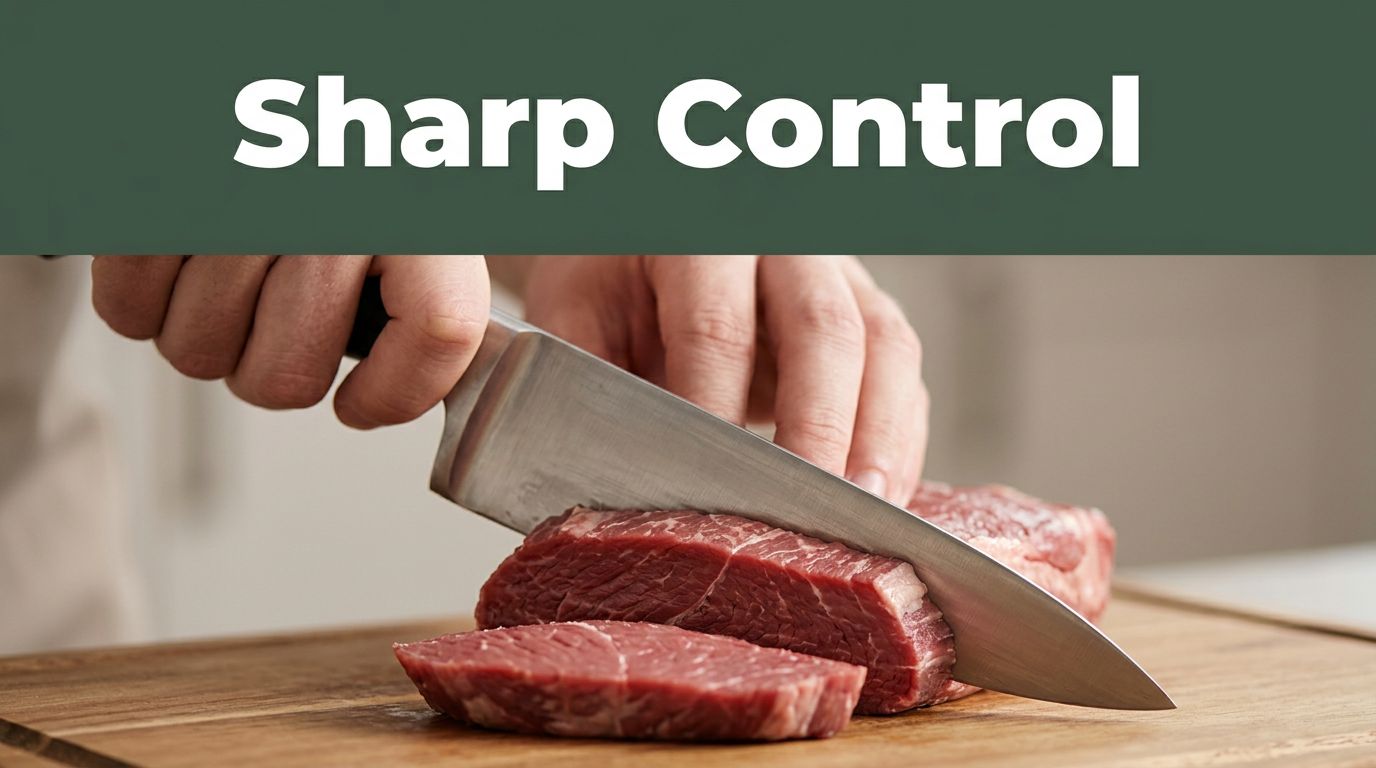
Picture this: You’re a busy home cook rushing through dinner prep. One wobbly knife slice turns a perfect steak into ragged chunks. You waste a pound of meat and nick your finger in the process.
That’s knife control slipping away. It means keeping a firm, steady hold on your knife for clean, precise cuts. Poor technique wastes up to 20 percent of your meat. Plus, kitchen knife injuries send over 360,000 people to the ER each year.
You can fix that. Less waste means lower grocery bills and tastier meals from full portions. Better control keeps you safe from cuts. In this guide, you’ll learn knife choice, grips, techniques, and safety habits. Ready to slice smarter?
Choose and Prep Knives Built for Meat Control
The right knife sets you up for control from the start. It reduces slips and ragged edges that chew up meat. A sharp, balanced blade glides through instead of tearing.
Start with basics. A chef’s knife handles most tasks like beef or pork. A boning knife trims fat from poultry and fish. Serrated blades tackle tough cuts like brisket.
Check your knives often. Dull blades drag and cause waste. Loose handles shake your grip. Test sharpness by slicing paper. It should cut clean without tearing.
Sharpen weekly with a whetstone or pull-through sharpener. Hone daily with a rod. Store blades in blocks or on magnetic strips. This protects edges and keeps them ready.
Match knife size to your hand. A too-big blade tires you out. Too small lacks power. Pros pick based on comfort for steady control.
Top Knife Picks for Every Meat Type
Pick by meat type for best results. An 8-inch chef’s knife slices beef and pork smoothly. Use a 6-inch boning knife for chicken or fish. A cleaver chops through bones.
Handles matter too. Wood or plastic grips stay firm in wet hands. Avoid metal that slips. Skip cheap knives; they bend under pressure.
Budget options under $50 work fine. Brands like Victorinox offer durable steel without high cost.
Here’s a quick comparison:
| Knife Type | Best For | Length | Handle Tip |
|---|---|---|---|
| Chef’s | Beef, Pork | 8-inch | Wood for grip |
| Boning | Poultry, Fish | 6-inch | Flexible blade |
| Cleaver | Bones, Tough Cuts | 7-inch | Heavy for power |
This setup minimizes waste. You get even cuts every time.
Sharpen and Hone for Peak Cutting Power
Sharpening restores edge. Use a whetstone soaked in water. Hold at a 20-degree angle. Do 10 strokes per side.
Hone before each use. Pull the blade down the rod gently. Alternate sides. It straightens the edge without removing metal.
Test sharpness on a tomato. It should slice without dragging. Safety first: always cut away from your body.
Do this routine. You’ll notice cleaner cuts and less meat lost to mushy edges.
Perfect Your Grip and Stance for Rock-Solid Control
Body position anchors your knife control. Shaky hands lead to hacks that waste meat. Solid mechanics deliver straight slices.
Master the pinch grip first. Place thumb and index finger on the blade spine. Curl middle finger under the handle. This gives precision.
Add the claw grip for your guide hand. Tuck fingers into a claw shape. Knuckles protect fingertips as you push food forward.
Stance matters. Feet shoulder-width apart. Tuck elbows close to your sides. Bend knees slightly for balance.
Practice on carrots. Aim for even slices. Shaky hands? Slow down and reset grip. Straight cuts save every bit of meat.
For example, a hack leaves torn edges. A controlled slice keeps it whole. You portion perfectly.
Grip Techniques That Pros Swear By
Pinch grip shines for detail work. Use it to trim fat. Hammer grip suits chopping. Fist the handle for power.
Claw grip guides safely. Practice on soft foods like onions first. More contact points prevent slips.
These grips build confidence. Your cuts stay predictable. Less waste follows.
Stance Secrets to Keep Cuts Predictable
Anchor your board with a wet paper towel. It won’t slide. Keep elbows in. Balance weight on both feet.
Non-knife hand stays stable. Guide without reaching. This setup keeps motion smooth.
You’ll feel the difference. Cuts line up even. Meat portions stay full size.
Smart Slicing Moves to Save Every Bit of Meat
Techniques turn control into savings. Rock chop herbs before meat. It preps your rhythm.
Use push cuts for strips. Slice against the grain for tenderness. Follow fat lines when trimming.
Portion first. Measure steaks before cutting. Save scraps for stock. Practice drops waste by 15 percent.
For steak, thin slices make jerky. Thick cuts suit roasts. Chicken needs shallow angles.
Control prevents overcuts. You keep full yields.
Slice and Dice Without Losing a Scrap
Lift the knife low. Let gravity guide the blade down. Angle slightly for clean throughs.
Thin slices for stir-fry. Thick for grilling. Flow matters. Steady motion wastes nothing.
Trim Fat and Sinew Like a Butcher
Freeze meat 20 minutes for firmness. Use shallow cuts with a flexible blade.
Follow natural lines. Save trimmings. Turn them into broth bases.
This method maximizes usable meat. Your meals stretch further.
Lock In Safety Habits That Prevent Kitchen Disasters
Safety habits lock in control. Use wood or plastic boards. They grip knives better than glass.
Never catch a falling knife. Step back and let it drop. Dry hands and tools always.
Avoid rushing. Dull knives cause most slips. Roll sleeves up.
Distractions kill focus. Create a clear zone. Stats show 80 percent of cuts are preventable.
Build these into routine. Confidence grows with practice.
Pitfalls That Wreck Control and How to Dodge Them
Dull blades top the list. Check weekly. Bad lighting hides edges; add overhead lights.
Distractions pull focus. Work alone if possible. Routine checks keep you sharp.
Quick Fixes for Knife Mishaps
Apply direct pressure to stop bleeding. Elevate the hand. Clean with soap and water.
Use butter or flour for stuck shards. See a doctor for deep cuts or numbness.
These steps save your night.
Mastering knife control starts with the right tools and grip. Practice one technique today, like the pinch grip. You’ll waste less meat and stay safe.
Share your before-and-after waste savings in the comments. What tip will you try first? Subscribe for more kitchen hacks that save time and money.
Slice smarter. Waste less. Stay safe.
(Word count: 1,482)