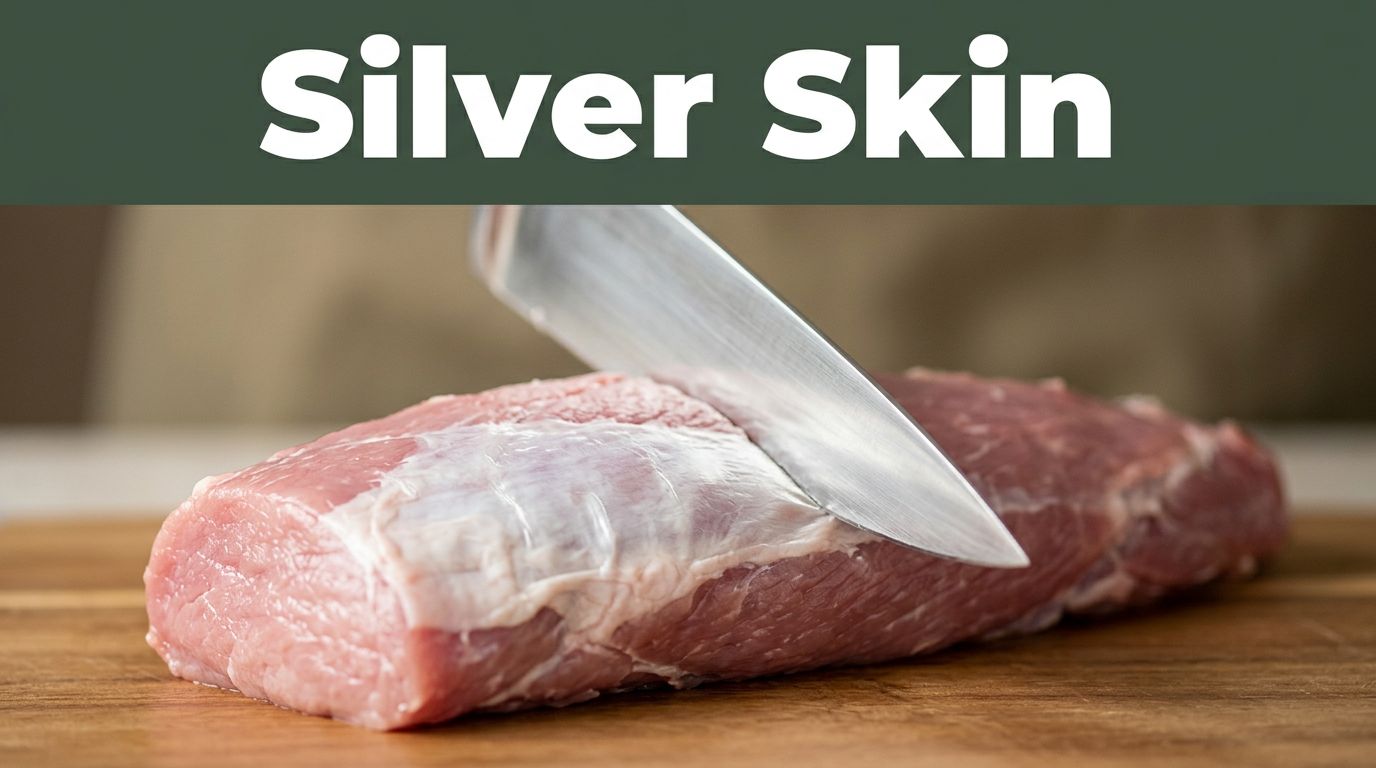
Picture this. You’re at a backyard barbecue. You bite into a grilled pork tenderloin. Instead of juicy tenderness, you hit a rubbery chew that ruins the bite. That culprit is silver skin, the shiny white membrane on many meat cuts. It consists of tough connective tissue that wraps around muscles.
Silver skin appears often on pork tenderloin, beef eye of round, and venison backstraps. You see it as a pearly, slippery layer. It stays chewy no matter the cooking method. Other tissues soften with heat. This one does not.
Remove it, and your meat transforms. You’ll get even flavors and perfect texture. This post explains the science behind silver skin. It covers why it’s tough, its impact on your meals, a simple removal guide, and tips for cooking the rest right. Home cooks, get ready to upgrade every cut.
What Makes Silver Skin So Tough? Unpacking the Science
Silver skin acts as a protective sheath around muscles. It packs dense collagen and elastin fibers. These proteins make it strong and resistant.
Intramuscular connective tissue differs. That type breaks down into gelatin during slow cooking. Silver skin resists because its fibers sit tight together. They hold little moisture. High heat and time alone won’t soften it.
Think of it like this. Regular collagen melts like soft jelly in a stew. Silver skin stretches like a rubber band. It snaps back no matter what. Cooks call it “silver skin” for its glossy shine under light. That look comes from its smooth, fibrous surface.
Moisture plays a role too. Silver skin dries out fast. It blocks heat from reaching the meat below evenly. As a result, the muscle overcooks while the skin stays intact.
Collagen vs. Elastin: The Key Players
Collagen forms the bulk of silver skin. This protein builds long, rope-like fibers. They need hours of moist heat above 160 degrees Fahrenheit to unwind. Your body digests them slowly too.
Elastin adds stretch. It’s rubbery and yellow. Even pressure cookers barely touch it. Enzymes from tenderizers work on looser collagen. They bounce off silver skin’s density.
Take ribs as an example. Slow braising turns their collagen tender. But leave silver skin on tenderloin. It chews like gristle after the same cook. That’s because silver skin packs fibers tighter.
Where Silver Skin Hides on Your Favorite Cuts
It covers lean muscles that barely move. Pork tenderloin has it full length on one side. Beef eye of round or sirloin tip shows a thick sheet along the edge.
Venison backstraps and lamb loins carry it too. These cuts lack fat marbling. So the membrane stands out. Feel for a slippery, white film when you buy. It pulls away slightly from the red meat.
Next time you prep a roast, check those spots first. Spotting it early saves frustration later.

Why Skip the Silver Skin? The Real Impact on Taste and Texture
Leave silver skin on, and chewy bites dominate. It overpowers the meat’s natural flavor. Even long marinades fail to penetrate it.
Heat makes it worse. The membrane contracts fast. It squeezes juices from the meat underneath. Your steak or chop ends up dry.
Remove it first. Seasonings soak in better. Cooking heats evenly. You end up with tender, juicy results every time.
Tests show the difference. Cooked tenderloin with skin scores high on chewiness. Without it, texture improves by half. Everyone wins, from kids to grandparents.
Health matters too. Dense tissue strains jaws. It digests slower in the stomach. Easier chewing helps all ages enjoy meals.
The Chew Factor: What Science Says About Eating It
Human teeth grind softer meat fast. Silver skin resists. Stomach acids take longer on its fibers.
Studies measure tenderness with tools like Warner-Bratzler shears. They cut samples and record force needed. Silver skin spikes those numbers. It stays tough even after braising.
In short, you end up chewing forever. That pulls focus from the meal’s joy.
Juiciness Lost: How It Steals Moisture from Meat
Heat hits silver skin at low temps. Below 160 degrees, it tightens like shrink-wrap. Above that, it bursts and pushes juices out.
Lean cuts suffer most. The meat dries while waiting for the skin to give. Removal changes this. Tests find up to 20 percent more moisture retained.
Cook skinless, and flavors stay locked in. No more dry disappointment.
Master Removing Silver Skin in Minutes: Your Step-by-Step Guide
Chill the meat first. Cold firms it up for clean cuts. Pat dry with paper towels. This adds grip.
Work on a stable surface. Hold the knife at a shallow angle. Avoid hacking. That tears the meat.
Start at one end. Loosen a corner. Pull while slicing underneath. Most comes off in sheets.
Practice builds speed. You’ll do a pound in two to five minutes.
Common mistake: using force. It mangles the cut. Stay patient for best results.
Tools That Make It Easy for Beginners
Grab a sharp boning or filet knife. The thin blade slides under precisely. A grippy cutting board prevents slips.
Paper towels help grip the skin. Some use a meat hook or pliers for tough spots. Dull knives tear everything. They raise accident risk too.
Invest in quality. It pays off fast.
Proven Technique: Grip, Slide, and Peel
Follow these steps for clean removal:
- Find the edge. Insert knife tip to lift a small flap.
- Grip the flap with a towel. Pull at a 45-degree angle. Slide the knife flat underneath. Keep tension steady.
- Trim any leftovers. Smooth strokes work best.
Adapt for curves. On round roasts, rotate as you go. Round cuts take practice. Straight tenderloins go quick.
Beyond Silver Skin: Cooking Connective Tissue Right Every Time
Other tissues respond to low-and-slow methods. Intramuscular collagen turns to gelatin around 160 to 180 degrees. Moisture and time do the work.
Silver skin never joins in. Always remove it upfront. Then treat the meat right.
Dry brine first. Salt draws out then reabsorbs moisture. Sear for crust. Finish in the oven low.
You’ll nail roasts and chops. Confidence grows with each try.
Low-and-Slow Magic for the Rest of the Meat
Acid, heat, and moisture unwind collagen strands. They form silky gelatin. Brisket or shanks shine here.
Keep temps steady. Add broth for humidity. Silver skin would block this. Good thing it’s gone.
Hours pay off in fork-tender bites.
Flavor Boosts After Cleanup
Rubs stick better without the barrier. Herbs and spices flavor deep.
Grilling shortens slightly. No waiting for skin to cook through. Try herb-crusted pork tenderloin. Mix garlic, rosemary, and oil. Roast at 400 degrees to 145 internal.
Results impress every time.
Silver skin’s collagen and elastin make it unbeatable by cooking alone. Remove it, and tenderness unlocks. Next grocery trip, check your cuts. Peel it off for juicy, flavorful wins.
You’ve got the science and steps now. Try it on tenderloin this week. Notice the difference? Share your results in the comments. Subscribe for more tips on meat magic.
Turn tough cuts into triumphs. Happy cooking.
(Word count: 1,482)