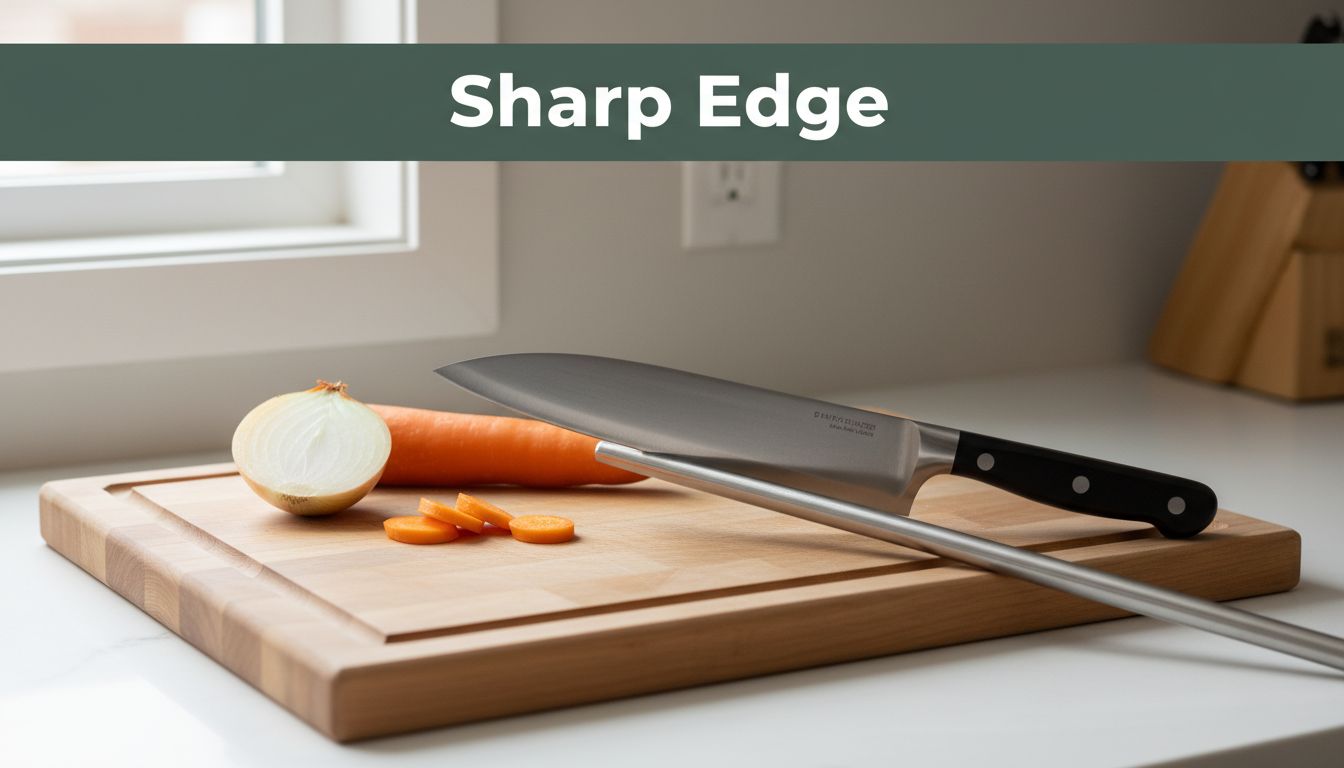
Picture this. You’re deep into a marathon meal prep. Onions, carrots, proteins stack up on the cutting board. Two hours in, your favorite chef’s knife starts dragging. Slices turn ragged. Frustration builds fast.
A honing steel fixes that quick. It straightens tiny bends on the blade edge. No metal grinds away like with sharpening stones. You keep cutting clean without a full sharpen break.
This works perfect for long hauls. Think holiday feasts, big batch cooking, or field work like butchering game. Hone in seconds. Stay sharp, safe, and fast. In this post, you’ll learn what the tool does, when to spot the need, exact steps to use it, pitfalls to skip, and care tips. By the end, you’ll grab your steel with confidence mid-session.
What a Honing Steel Does and Why It Saves Your Long Sessions
A honing steel looks like a long, thin rod. Often metal or ceramic. You run your knife edge down it at an angle. This realigns the blade’s microscopic edge. Over time, cuts bend that edge. It rolls over like a dull pencil tip.
Sharpening grinds metal off to create a new edge. Honing just pushes it back straight. So you preserve blade thickness. Edges last longer.
In long sessions, this shines. Say you’re chopping for eight hours straight. A quick hone every half hour keeps slices effortless. Tomatoes glide instead of squish. Proteins cut precise without tearing.
Steel types vary. Fine rods suit daily kitchen work. Ceramic ones handle tougher realignments. Both beat stopping for stones mid-flow.
Benefits stack up. Speed returns instantly. You cut safer because slips drop. Fatigue fades with smooth action. Next time you’re in a big prep, that 30-second hone changes everything.
Honing Steel vs. Sharpening: Know the Difference to Use Right
People mix these up often. That leads to blade damage. Hone first to realign. Save sharpening for truly dull edges.
Here’s a quick breakdown:
| Aspect | Honing Steel | Sharpening |
|---|---|---|
| What it does | Straightens bent edge | Grinds away metal |
| Metal removed | None | Yes, creates new edge |
| Frequency | Every 10-30 minutes heavy use | Every few weeks or months |
| Time needed | 20-30 seconds | 5-15 minutes |
| Best for | Mid-session touch-ups | Full restoration |
Hone often. It stretches sharpening sessions. Your blades thank you with longer life.
How Frequent Honing Keeps Edges Lasting Through Hours of Work
Heavy cutting bends edges fast. Hone every 10 to 30 minutes. Or after 100 to 200 cuts. Adjust for task.
During a holiday feast, check after each course prep. Weekly meal preps? Hone between proteins and veggies. Hunters note it for field dressing. Quick passes prevent rolls that lead to slips.
Regular honing stops damage. Edges stay uniform. You work less tired because cuts flow easy. Safety rises too. Dull edges slip more.
Spot the Signs Your Blade Edge Is Begging for a Hone Mid-Session
Don’t wait till cuts fail. Spot issues early. That keeps sessions smooth.
Look for wavy reflections under light. Edge looks uneven. Or try paper. Sharp blades slice clean. Dull ones grab or tear.
Feel it on food. Tomatoes push back instead of part. Peppers crush edges. These signal bends.
In long work, inspect every 20 minutes. Quick check saves time. Fix before big messes.
Quick Visual and Touch Tests for Edge Alignment
Hold the blade edge to light. Bends show as bright spots or waves. Straight edges reflect even.
Touch gently with thumb. Run perpendicular to edge. Burrs feel like tiny hooks. Careful, no hard press. Cuts hurt.
Paper test works best. Slice newsprint or copy paper. Clean shear means good. Ragged means hone now.
Tomato proves it. Stem end slices easy with sharp. Dull crushes. Perfect for kitchen checks. No fancy gear needed.
Master the Technique: Step-by-Step Honing for Instant Blade Revival
Practice makes this smooth. Start on a stable surface. Hold steel vertical, tip down. Grip knife comfortable.
Key: match your knife’s edge angle. Most at 15 to 20 degrees.
- Set steel steady. Clamp or hold firm against counter.
- Position knife. Spine high, edge down at angle. Relaxed hand.
- Stroke from tip to heel. Light pressure. 10 passes one side.
- Switch sides. Match strokes. Even count.
- Wipe blade clean. Test on paper.
Safety first. Fingers clear of path. Steady motion avoids slips.
Lefties reverse strokes. Works for chef knives, parings, even hunters.
Practice dry runs. Cheap blades build skill. Soon it feels natural.

Nailing the Perfect Angle and Pressure Every Time
Angle matters most. Lay knife like a book spine open slight. Eyeball 15 degrees for Japanese blades, 20 for German.
No guides? Practice on paper edge first. Match till smooth.
Pressure stays light. Like guiding ice cream scoop. Steel glides. No grind sound.
Hear a soft whoosh. See edge straighten. Too hard dulls fast. Too light does nothing.
Stroke Patterns That Work Best for Busy Sessions
Straight down wins for speed. Knife edge leads, tip to heel.
Sweep edge-leading if comfy. Curves follow blade.
5 to 10 passes per side. Alternate always. Finish both directions. Full realign.
Even strokes prevent hooks. Busy cooks love this rhythm.
Avoid These Traps and Unlock Pro-Level Honing Hacks
Too much force rolls edges worse. Use feather touch always.
Wrong angle weakens one side. Practice consistent match.
Skip a side? Blade pulls uneven. Balance every time.
Chipped? Hone light first. Sharpen after.
Hacks help. Magnetic steels catch metal bits safe. Store dry, hung up.
Pair with wood boards. They cradle angle natural.
Oil lightly now and then. Repels rust.
Try magnetic next buy. Or ceramic for crooks.
Daily Care to Keep Your Honing Steel Ready for Action
Wipe after each use. Dry cloth only.
Skip dishwasher. Water warps rods.
Check for grooves. Worn steel skips. Replace yearly heavy use.
Ceramic holds up better. Inspect same way.
Simple routine keeps it sharp-ready.
Keep Your Edge Sharp, Session After Session
Your honing steel turns long cuts into wins. Quick realigns beat dull drags every time.
You save hours now. Blades last longer. Cuts stay safe and clean.
Grab that steel next prep. Run the steps. Feel the difference.
Share your honing stories below. What session changed for you? Hit subscribe for more knife care tips.
Your knives deliver perfect slices. Every time.