You’ve sliced into a chicken thigh only to hack away chunks of meat. Or wrestled a beef roast from its bone with mangled results. These frustrations hit home butchers and pros alike. They often stem from grabbing the wrong knife for the job.
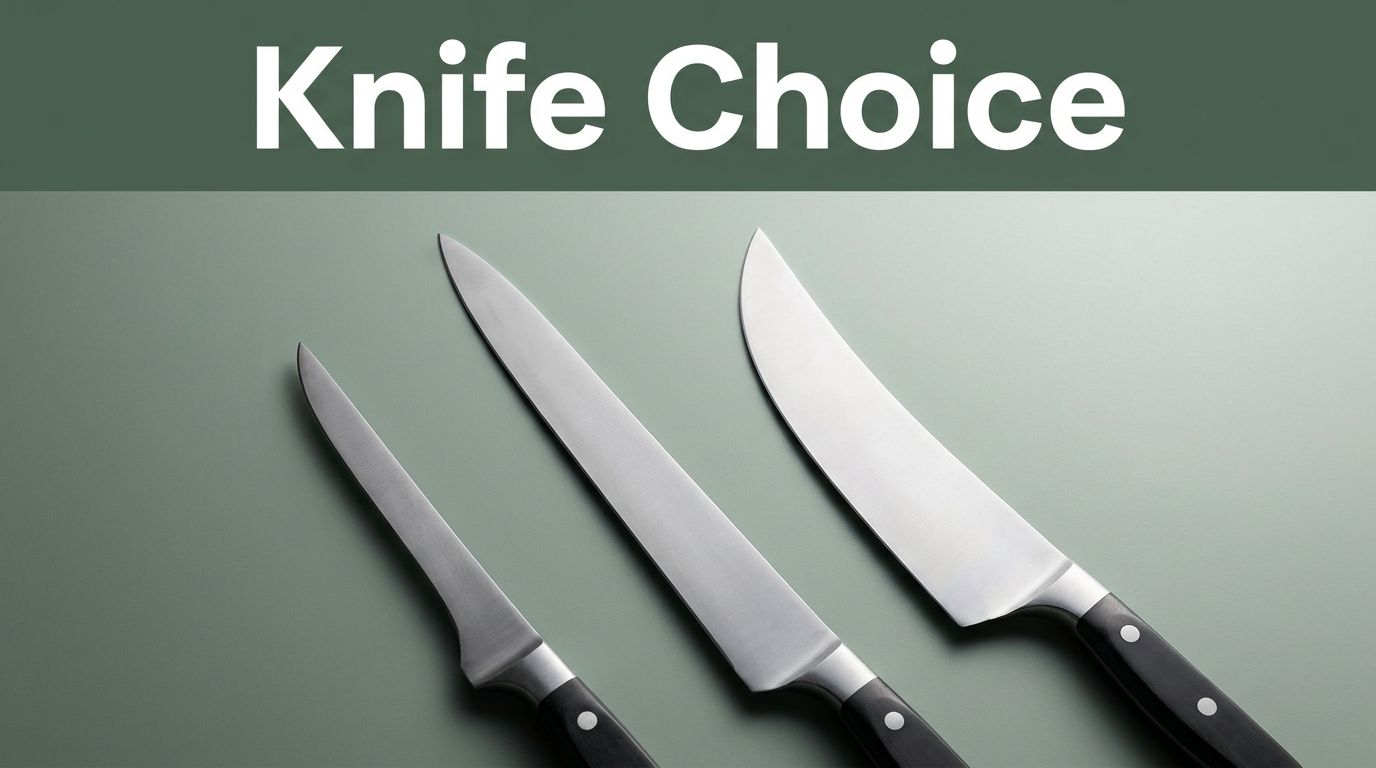
A boning knife features a narrow, pointed blade for precise bone removal. The breaking knife packs a long, stiff blade to split large cuts. A cimeter curves for smooth trimming and skinning. Knowing their differences leads to cleaner cuts, less waste, and safer hands. You save time and money too.
This guide breaks it down. First, explore each knife’s core traits and top uses. Then, compare them head-to-head. Finally, follow a simple process to choose yours. You’ll walk away ready to upgrade your toolkit.
Boning Knife Basics: Precision Tool for Removing Bones
Boning knives excel at detail work. They typically have a 5- to 6-inch blade. It’s narrow and tapers to a sharp point. Many offer flexibility, so the blade bends around bones and joints.
Steel choices include high-carbon stainless for edge retention. You get rust resistance plus easy sharpening. Stiffer versions suit beginners who fear too much give.
Use a boning knife to debone chicken or fillet fish. It trims beef roasts clean. Picture prepping a pork loin for grilling. You slide the tip under silverskin, then weave out the bone. Minimal meat sticks behind. Cuts glide smooth. This reduces slips and injuries from forcing the blade.
In addition, the light weight prevents hand fatigue during long sessions. Beginners pick models around 6 ounces. Pros opt for flexible ones that hug contours. Always pair with a stable cutting board.
Top Tasks Where Boning Knives Shine
Boning knives handle jobs that demand finesse. Here’s where they outperform others:
- Separating poultry legs from thighs: The flex lets you follow the joint without gouging meat. Grip firm near the blade base to avoid slips.
- Filleting salmon: Pointed tip starts at the backbone. Narrow width keeps fillets intact.
- Removing ribs from pork spareribs: Curve around bones for clean strips. Less waste means more to grill.
- Butterflying lamb chops: Slice parallel to bone, then open flat. Perfect for even cooking.
Safety comes first. Hold the meat steady. Angle the blade away from your body. These tasks show why boning knives save meat and time.
Breaking Knife Essentials: Heavy Duty for Big Meat Cuts
Breaking knives tackle heavy work. Expect a 10- to 15-inch blade. It’s broad, straight or slightly curved, and completely stiff. The hefty handle gives leverage for tough jobs.
Durability stands out. Thick steel withstands repeated impacts. Butchers use them in high-volume shops. They break down beef quarters into primals. Or split pork shoulders from the carcass.
For example, at a butcher counter, you turn a whole hog into sections. The blade powers through connective tissue. No flex means straight, forceful cuts. Momentum from the weight helps hacks stay true.
However, the size demands two-handed control. Sharpen at a 20-degree angle for longevity. Weight around 1 to 1.5 pounds aids power but tires arms fast. Still, for initial breakdowns, nothing beats it.
When to Grab a Breaking Knife Over the Others
Reach for a breaking knife on large-scale tasks. It shines in primal cuts from beef sides. Initial poultry evisceration works too. Game processing benefits from its reach.
In contrast, boning knives lack power here. Cimeters curve too much for straight splits. The stiffness prevents wobbling on bone.
Pro tip: Swing with body weight, not just arms. This builds momentum for clean breaks. Weight aids control on big pieces. Save it for jobs over 10 pounds.
Cimeter Knife Spotlight: Curved Blade for Smooth Trimming
Cimeters draw eyes with their arc. The 10- to 14-inch blade curves like a scimitar sword. Rigid build ensures control. Ergonomic handles fit long sessions.
They skin large animals fast. Trim fat from briskets too. Or finish breaks with precision. Hunters love them for pulling hides off deer.
Take beef brisket shaping. Rock the curve along the meat surface. It peels fat in sheets. Efficiency comes from the draw motion. Unlike straight blades, it follows contours natural.
Besides, the length reaches deep without repositioning. Steel holds edges well under pressure. Keep it honed to avoid drags.
Signature Uses That Make Cimeters Stand Out
Cimeters own curved tasks. Skinning whole carcasses tops the list. Caping game animals follows close.
Contour ribeyes with ease. The belly draw technique shines here. Pull blade toward you in a smooth arc.
Care matters. Hone the curve often. Dull spots cause tearing. These uses highlight why cimeters trim like pros.
Side-by-Side Showdown: Boning vs Breaking vs Cimeter
These knives serve distinct roles. Blade traits decide the fit. Here’s a quick comparison table to spot differences.
| Feature | Boning Knife | Breaking Knife | Cimeter |
|---|---|---|---|
| Blade Length | 5-6 inches | 10-15 inches | 10-14 inches |
| Blade Shape | Narrow, pointed | Broad, straight/curve | Curved arc |
| Flex | High/semi | None | None |
| Weight | Light (6-8 oz) | Heavy (1-1.5 lbs) | Medium (12-16 oz) |
| Best For | Precision deboning | Carcass breakdown | Skinning/trimming |
| Cost Range | $20-80 | $50-150 | $40-120 |
This table shows patterns. Short points aid detail. Long stiffness powers big jobs. Curves flow on surfaces.
Patterns emerge for your needs. Match to tasks first.
Blade Shape, Size, and Flex: The Big Deciders
Shape drives use. Pointed flex on boning knives hugs bones. You weave precise paths.
Straight stiffness in breaking knives pushes through hide and sinew. Size gives reach on quarters.
Curves on cimeters enable rocking. Short blades suit control. Long ones cover ground fast.
Flex matters most for beginners. Stiff options forgive errors less.
Other Factors Like Weight, Grip, and Durability
Heft affects control. Light boning knives reduce fatigue. Heavy breakers build momentum.
Grips vary: wood for feel, plastic for hygiene. Edge retention favors high-carbon steel across all.
Sharpening proves simple on straights. Curves need care. Rust resistance cuts maintenance.
Step-by-Step Guide to Choosing Your Perfect Knife
Start with your main tasks. Detail work? Go boning. Heavy splits? Breaking. Trimming? Cimeter.
Next, check skill level. Newbies pick stiffer blades. Pros handle flex.
Budget runs $20 to $150. Test feel in stores if you can. Versatility counts: one knife for most jobs.
Consider combos. Boning plus cimeter covers home needs.
Ask yourself: Do I hunt or BBQ? That narrows it.
Align Knife Choice with Your Experience and Goals
Beginners start with stiff boning knives. They build confidence.
Pros collect all three. Home cooks buy task-focused: breaking for big buys, cimeter for game.
Goals shape picks. Hunting favors cimeters. BBQ leans boning.
Match to avoid frustration.
Budget, Care, and Where to Buy Smart
Entry tiers hit $20-50. Pro grades top $100.
Sharpen weekly with whetstones. Store dry to fight rust.
Quality brands like Dexter or Victorinox last years. Routine: oil hinges, hone daily.
Match Your Cuts to the Right Blade
Precision rules with boning knives. They minimize waste on poultry and fish. Breaking knives deliver power for primals. Cimeters trim smooth thanks to curves.
Assess your tasks and skill. Invest in one that fits. Better cuts await.
Grab your go-to this weekend. Share in comments: boning, breaking, or cimeter? Your butchering game levels up now.