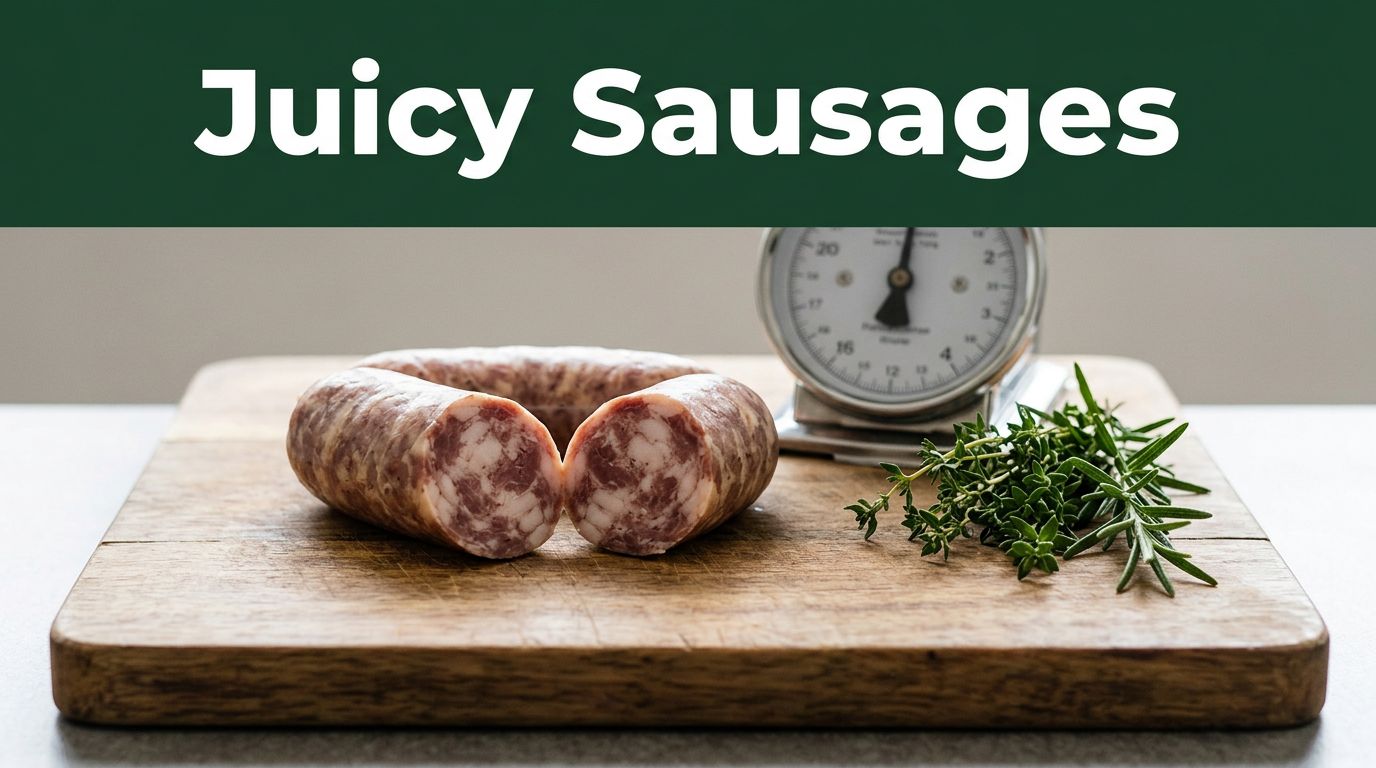
Imagine biting into a homemade sausage that’s dry and crumbly. Now picture one that’s juicy, with flavor bursting out. The difference comes down to the lean-to-fat ratio.
This ratio mixes lean meat and fat, like 80 percent lean pork to 20 percent fat. It locks in moisture, boosts richness, and stops tough results. Pros target 20 to 30 percent fat for most sausages.
You’ll learn fat’s key roles, popular ratios, matching factors, and testing tips. These steps make juicy sausages easy at home.
How Fat Turns Good Meat into Amazing Sausages
Fat does more than add calories. It melts during cooking and bastes the meat from inside. That keeps everything moist.
Fat also carries spices deep into the bite. It creates the satisfying snap in the casing. Without it, flavors fall flat.
Emulsion binds fat and lean meat with water and salt. This gives a smooth texture. All-fat sausages turn greasy. No-fat ones dry out and feel mealy.
Fat melts at lower temperatures than proteins. So it lubricates first. Trim fat from pork shoulder, which has about 20 percent naturally. Add pork fatback if needed.
Spotting Trouble from Wrong Ratios Right Away
Too lean shows up fast. Sausages shrink, casings crack, and the bite crumbles dry.
Too much fat pools oil on the plate. Texture turns mushy. Casings might burst.
Breakfast links often fail lean. Italian sausage goes oily with excess. Add fatback to lean batches. Cut back and bind more for fatty ones.
Popular Lean-to-Fat Ratios and When to Use Them
Ratios use lean/fat percents. An 80/20 mix means 80 percent lean, 20 percent fat. For four pounds lean, add one pound fat.
Start simple. Adjust for type later.
Southern recipes often go higher fat for grilling. That holds up to heat.
80/20: Your Safe Starting Point for Juicy Results
This ratio suits beginners best. It’s juicy without grease. Sausages hold shape on grill or pan.
Try it for breakfast patties or basic fresh pork. Weigh lean pork butt. Add pork fatback to hit 20 percent.
Cook a test link. You’ll see the balance right away.
Amp Up Flavor with 70/30 for Special Sausages
More fat shines in smoked links or bratwurst. It delivers silkier texture.
Use strong binders like nonfat dry milk. That prevents mush.
Watch cooking temps. Fat can cause flare-ups. Still, the payoff in taste makes it worth it.
Match Your Ratio to Meat Type, Style, and Cooking Plans
Customize for your setup. Pork takes 25 percent fat well. Beef needs 30 percent for tenderness.
Game like venison wants up to 40 percent. Otherwise, it dries fast.
Fresh styles differ from cured. Cooking method matters too. Families who like lean? Try 85/15. Trim visible fat, but keep enough for flavor.
Health counts, yet joy comes from balance.
Pork, Beef, or Poultry: Adjust Fat by Meat
Pork shoulder runs 80/20 naturally. Add little extra.
Beef chuck needs beef suet for 75/25. That tenderizes.
Chicken thighs bring skin fat. Aim 85/15. Wild game blends with pork fat best.
Each meat acts different under heat.
Fresh, Smoked, or Cured: Style Changes Everything
Fresh grillers like 80/20. They cook quick.
Cured salami takes 70/30 for aging. Fat protects during dry time.
Emulsified frankfurters hit 60/40 with ice and binders. Coarse grinds stay leaner.
Style sets the fat need.
Grill, Pan-Fry, or Smoke: Pick Ratio for Your Method
High-heat grills need leaner mixes. Less fat stops fires.
Slow smokes handle richer fat. It renders slow.
Pan-fry calls for balance. Fat bastes without overflow.
Match method to avoid mess.
Test Small Batches to Dial in Your Ideal Ratio
Experiment beats guessing. Make one-pound tests. Grind, stuff, and cook half two ways.
Track notes on texture and juiciness. Adjust fat by five percent next time.
Use a kitchen scale for precision. Check doneness at 160 degrees F internal. Keep a log: date, ratio, meat, notes like “great snap, bit dry.”
Fun comes from tweaking.
Quick Test Recipe for Any Meat
Weigh one pound total: say 0.8 pounds lean, 0.2 pounds fat for 80/20.
Add 1.5 percent salt by weight. Mix in spices.
Chill meat first. Grind coarse, then fine. Mix cold. Stuff casings. Cook samples: grill one, pan-fry another.
Simple start.
Taste and Feel: What to Look For
Perfect sausages snap juicy. No grease pools. Spices pop clear.
Dry? Add more fat next batch. Oily? Cut fat, boost binders.
Feel guides you. Trust your bite.
Your sausages transform with the right lean-to-fat ratio. Fat bastes, binds, and flavors. Start at 80/20. Tweak for meat, style, and cooking.
Grab your grinder this weekend. Test a batch.
Share your best ratio in comments. What worked for you? Your homemade links will impress every time.