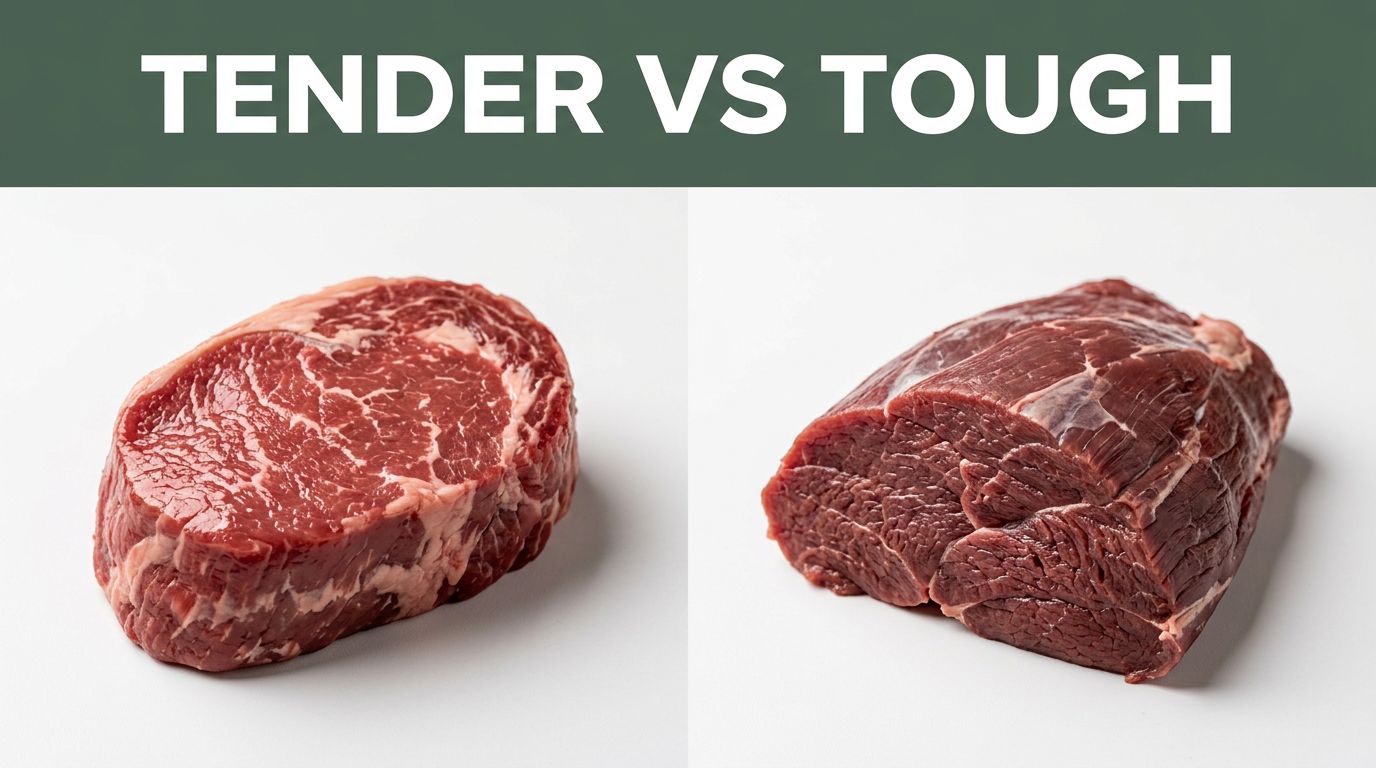
You’ve sunk your fork into what promised to be a juicy steak at that upscale dinner. Instead, it fights back like shoe leather. Tough muscle groups strike again.
Tenderness boils down to one simple fact. Animals work some muscles hard every day, like their legs or shoulders. Others sit idle, staying soft and tender.
You grab meat at the store and wonder: is this cut from a tough zone or a tender one? Usage tells the story. Legs haul the animal around, so they build up fibers that resist chewing. Meanwhile, the loin barely moves, keeping it melt-in-your-mouth soft.
That’s why knowing tender vs. tough muscle groups changes everything. You’ll spot meat cuts by usage with ease. No more chewy surprises.
In this post, we cover the science basics first. Then, real-world examples of each type. Next, smart shopping tips follow. Finally, cooking advice makes tough cuts shine.
Stick around. You’ll pick perfect cuts every time, and dinners turn epic. Let’s dive into the science that explains it all.
Why Muscle Usage Turns Meat Tender or Tough
Animals move just like we do. Some muscles work overtime, others rest easy. This difference creates tender vs. tough muscle groups. Busy ones pack extra collagen, a tough protein that links muscle fibers. Heat it fast, and collagen shrinks tight. Chew becomes a workout. Idle muscles skip that buildup. They stay soft and juicy.
Think of a cow’s basic layout. Legs and shoulders handle constant weight and steps. Those zones toughen up over time. The loin along the back barely flexes. It remains plush. You can distinguish tender vs tough muscles based on usage patterns like this. Spot the hardworking spots, and you’ll dodge chewy bites. Plus, it saves cash. No more wasting money on cuts that flop in the pan.
In short, usage builds structure in meat. Hard-worked areas need slow cooking to unwind. Lazy ones grill up perfect. Let’s break it down further.
The Role of Collagen Buildup in Busy Muscles
Repeated use packs collagen into muscles. This protein acts like tiny ropes binding fibers together. Animals stand, walk, or pull loads daily. Each motion lays down more collagen. Over time, those ropes thicken and tangle.
Consider calluses on your hands. Grip tools often, and skin hardens for protection. Muscles do the same. A cow’s leg hauls its body miles. Collagen multiplies there, turning meat dense. Slice it raw, and it looks stringy.
Tender muscles avoid this fate. They see little action, so collagen stays low. No ropes to fight your teeth. Quick sear works fine. Busy ones demand patience, though. High heat locks collagen rigid. It fights back on the plate.
Low-heat methods change that. Simmer or braise breaks ropes slowly. Moisture softens everything. You’ll turn shank into fork-tender gold. That’s why butchers push tough cuts for stews. They know the science. You save tough meat from the trash. Instead, enjoy rich flavor after a few hours.
Busy muscles build defenses for life. Harvest them right, and they reward you.
Low-Activity Muscles Stay Naturally Soft
Idle muscles keep things simple. Fine fibers run short and loose. No heavy lifting means no thickening. Fat slips in between, creating marbling. That combo melts in your mouth.
Picture human bodies for contrast. Calves pound pavement daily. They bulge with collagen from endless steps. Abs on a couch potato? Soft and giving. Little use keeps them plush. Cow muscles follow suit. Back zones lounge, so they marble up nice.
This setup shines for fast cooking. High heat renders fat quick. Fibers relax without ropes to shrink. Sear a loin steak medium-rare. Juices stay locked in. No chew needed.
Grilling perks stand out here. Tender cuts hit perfect doneness fast. Smoke infuses flavor before drying out. Busy muscles would turn leathery by then.
You’ll crave these for weeknights. Quick prep, big payoff. Spot low-activity zones next shop. Your plate wins every time.
Best Tender Cuts from the Animal’s Easy Zones
Cows, pigs, and lambs all have easy zones. These muscles rest most of the time. Little work keeps them soft and full of flavor. Fat weaves in for extra juiciness. You get melt-in-your-mouth bites every time.
Spot these tender muscle groups on labels or at the butcher counter. Look for names like loin, rib, or tenderloin. They often show nice marbling, that white fat network inside. Displays highlight even color and smooth texture. Avoid stringy edges or heavy fat caps from busier areas.
Here are top tender muscle groups examples and why usage makes them stand out:
- Loin area: Sits along the spine with almost no flexing. Short fibers plus intramuscular fat create buttery tenderness. Beef strip loin or pork tenderloin shine here. Juiciness comes from that marbling, which bastes as you eat. Labels say “New York strip” or “pork loin chop.”
- Rib primal: Supports light weight near the front. Minimal steps mean low collagen. Ribeye packs bold beefy taste from fat layers. Look for the “eye of ribeye” cap in stores, creamy white veins throughout.
- Tenderloin: Hides deep inside, untouched by movement. Pure softness rules, with subtle flavor boosted by any trim fat. Filet mignon cuts scream premium. Butchers wrap it tight; check for small, uniform shape.
These zones deliver tender cuts because they skip daily grind. Fat seals the deal for moisture. Next, we zoom in on stars from these spots.
Tenderloin Magic: The Least Worked Star
Tenderloin hides deep along the spine. It runs under the backbone from ribs to hips. This muscle does almost nothing. The animal never calls it into action. So, it stays incredibly soft, like butter at room temperature.
Filet mignon comes from its tip. Cut thick medallions, and they look cylindrical and even. No big fat cap covers it. Inside, you see fine, loose grain with little marbling. Touch it raw, and your finger sinks right in. No resistance at all.
Why so pricey? Butchers yield just 2-3% from each carcass. That rarity drives up cost. Plus, demand stays high for its foolproof tenderness. Everyone loves a steak that cuts with a fork.
In stores, seek “beef tenderloin” or “filet.” Displays show trimmed chains or whole roasts. Bright red color signals fresh. You pay more, but flavor rewards with pure, clean beef notes. Fat stays minimal, so juices lock in tight.
This cut proves low use wins. It sets the tenderness standard.
Rib and Loin Cuts That Deliver Big Flavor
Ribeye rules the rib section. This area carries light load near the shoulder. The cow shifts weight rarely here. So, fibers stay relaxed. Marbling turns it tender and tasty. Fat melts into every bite.
Grab a ribeye steak. You spot the curved bone sometimes, or boneless versions. Thick fat rim edges it, with veins inside. That intramuscular fat bastes as it cooks. Flavor bursts with rich, nutty depth. Unlike shoulder chuck next door, which works nonstop and toughens up, ribeye lounges easy.
Strip loin sits in the short loin primal. It spans the back midsection. Minimal twisting or lifting happens. Light use keeps collagen low. You get firm yet yielding texture. New York strip labels mark it clear. Look for even shape, moderate fat streak down the side.
Compare to sirloin nearby. Sirloin sees more hip action, so it firms quicker. Strip loin skips that, staying plush. Fat content varies but often hits medium. It amps beefiness without greasiness.
These cuts blend tenderness and punch. Easy zones plus marbling mean big wins. Check labels for “ribeye cap” or “loin end.” Displays stack them pretty. Your grill thanks you.
Tough Cuts from the Workhorse Muscle Groups
Workhorse muscles power animals through daily life. Shoulders shrug loads, legs carry weight all day. Constant action packs in dense connective tissue, so these tough muscle groups based on usage deliver bold flavor. Patience unlocks their potential. You save money too, since prices stay low. Slow cooking turns chew into melt. Check the grain direction first, those long fiber lines. Slice across them after cooking for easy bites. These cuts feed crowds with rich taste.
Shoulder Champs: Chuck and Brisket Basics
Chuck roasts come from the cow’s neck and shoulder. That area twists and lifts nonstop. Constant motion builds thick collagen layers between fibers. So, raw chuck looks marbled with silver-white webs. Big size matters here, often 3-5 pounds per roast. Perfect for family dinners or potlucks. One feeds six easily.
Brisket joins the party from the lower chest. It supports the front end during walks and grazes. Heavy use creates even denser tissue. Whole briskets weigh 10-15 pounds, so plan ahead. Butchers trim fat caps thick for moisture. Ask them to score the surface lightly. This helps flavors seep in during braises.
Spot quality at the counter. Look for even red color and flexible fat. Dense grain runs parallel, so note it for carving. Butcher tips include tying roasts tight for even shape. They often separate “blade” from “neck” chuck for variety. Both shine in ovens or smokers.
Cook low and slow, around 275 degrees for 4-6 hours. Collagen melts into gelatin, adding silky mouthfeel. Big flavor bursts from that hard work, beefy and deep. You get savings too, half the price of quick-grill cuts. Try chuck pot roast with onions. Guests rave every time.
Leg Powerhouses: Shank, Round, and Beyond
Hindquarter legs bear full body weight daily. Steps mile after mile toughen shank and round. Weight-bearing action stacks collagen tight, creating firm texture. Shanks slice into cross-cut circles, bone-in for stews. Round splits into rump, top, and eye, each lean and sturdy.
Prep unlocks versatility. Braise shanks till fork-tender. Roast rounds after marinating. Dense tissue needs moisture, so add stock or wine. Fun fact: Italians love veal shank as osso buco. They simmer it hours with veggies, turning tough into iconic Milanese dish.
Visual cues help at purchase. Grain shows straight lines down the leg. Fat stays minimal, so check for bright red hue. Butchers cube “stew meat” from scraps here, great value. Eye round roasts stay uniform, ideal for slicing thin post-cook.
Savings shine bright. Legs cost pennies per pound compared to back zones. Slow cooker recipes make weeknights simple. Simmer shank with tomatoes; broth thickens naturally from collagen. Flavor intensifies, smoky and hearty. Round beefs up sandwiches after chilling overnight.
These powerhouses reward effort. Grab them next shop. Your wallet and taste buds thank you.
Spot Tender vs Tough Cuts Like a Pro Shopper
You stand at the meat case, label in hand. Is this steak a quick grill winner or a slow-braise project? Spot tender vs tough muscle groups right there with easy checks. Use cow chart positions, marbling patterns, and a quick feel. Ask smart questions too. Beginners, relax. These steps build your confidence fast. You balance price and payoff every time. Tender spots cost more but cook quick. Tough ones save cash for big flavor after patience.
Decode Locations with a Quick Cow Chart Guide
Picture a cow chart at the butcher or online. It maps primal cuts like a treasure map. Front quarters near the loin stay tender from low use. Rear legs and shoulders toughen from hard work. Follow these numbered steps to read it quick.
- Find the spine line. Cuts along the back, like rib and loin, mark tender zones. Low flex keeps them soft. Examples include ribeye and strip steaks.
- Check shoulder and neck. Chuck sits here, full of workhorse fibers. Plan for stews.
- Scan the belly and plate. Short plate offers flavor but needs braising. Brisket below supports front weight daily.
- Hit the legs. Round and shank haul the load. Slice thin or simmer long.
- Note the sirloin tip. It borders tender loin but firms up toward hips.
This map flips confusion to control. Tender cuts cluster mid-back. Tough ones hug limbs. Print a basic beef chart for your fridge. Next shop, match labels to spots. You pick winners without guessing. Prices drop on leg cuts, so stock up.
Hands-On Checks: Touch, Look, and Smart Questions
Grab the meat package. Press firm with your thumb. Tender gives like a ripe peach; it bounces back slow. Tough resists, stays dented. Eye the surface next. Marbling shows white fat veins in tender loins, boosting juice. Tough rounds look lean, stringy grain tight.
Red flags help too. Bulky shapes with thick silver membranes scream tough shank. Dull color or heavy outer fat signals workhorse chuck. For tender, seek bright red with even fat lines.
Ask the butcher key questions. “Where on the cow?” Confirm back for tender, legs for tough. Probe aging: “Dry-aged?” Tender benefits most, softening further. Source matters, grass-fed toughens quicker.
Price seals the balance. Tender filets run $20-plus per pound for fast meals. Tough brisket sits at $5, yielding feasts. Beginners, start with one check per visit. You gain pro eyes fast. Your cart fills smart every time.
Cook Tender and Tough Muscles to Perfection
You picked your cuts based on usage. Now cook them right, or that knowledge wastes away. Tender muscles from lazy zones sear fast because low collagen lets heat relax fibers quick. Tough ones from workhorse areas need slow moisture to melt those ropes. Match the method, and every bite shines. Results beat guesswork every time.
Sear and Rest Tender Cuts for Juicy Wins
Tender loins and ribs skip heavy collagen buildup. High heat works fine here. It renders fat fast without shrinking fibers tight. Start with a hot pan or grill. Salt both sides first. Sear 3-4 minutes per side for medium-rare. Pull at 130 degrees internal. Rest under foil 5-10 minutes. Juices redistribute, so no dry bite.
Why rest? Usage kept these soft, but cutting too soon spills moisture. Always slice against the faint grain lines. Thin cuts stay pink center, full flavor. Try ribeye like this. Fat bastes as it rests. You get steakhouse results at home.
Filet mignon follows suit. Pat dry, season simple. Quick sear locks in clean beef taste. Low activity means no chew fight. These methods honor the easy life those muscles led.
Braise Tough Cuts Low and Slow for Fork-Tender Magic
Shoulders and legs pack collagen from daily grind. Fast heat toughens it more. Instead, braise at 275 degrees. Brown first for flavor base. Add liquid like stock or beer halfway up. Cover tight, cook 3-4 hours till probe slips easy. Collagen turns to gelatin, adding silkiness.
Slice against thick grain after cooling slight. Those long lines from usage run parallel, so cross cuts shorten fibers. Shank or chuck roasts yield rich broth too. Skim fat, serve over mash. Bold taste comes from hard work.
Brisket shines smoked low overnight. Moisture keeps it from drying. You transform cheap cuts into crowd-pleasers.
Pro Hacks to Elevate Any Cut
Marinades boost both types. Acid like vinegar tenderizes tough collagen slight. Oil carries herbs into tender fat. Soak 2-4 hours max, don’t drown. Dry-age tender cuts in fridge 3 days for deeper umami. Tough ones benefit from enzyme rubs like papaya.
Rest always, slice smart. Usage sets the stage, but these tweaks steal the show. Your dinners level up now.
Conclusion
You now grasp tender vs. tough muscle groups through simple clues. Usage drives it all: busy legs and shoulders pack collagen, so they look stringy and resist touch. Idle back zones stay soft with marbling. Location on the cow chart, plus quick looks and feels, reveal the truth every time.
These basics empower your next meat counter visit. No more chewy steak shocks like that first tough bite. Pick tender loins for fast grills or tough shanks for rich braises. You control tenderness and flavor with ease.
Grab one new cut this week. Test a chuck roast or ribeye. Share your go-to tender steak or tough meat win in the comments below. Subscribe for easy recipes that make every meal shine. What’s your biggest meat shopping win so far?